Veterinary
orthopedics
Freedom of movement is the foundation of a good quality of life for every pet. EriVet’s orthopedic team specializes in the diagnosis and treatment of diseases affecting bones, joints, tendons, and muscles.
Whether it is a growing puppy, a sports injury in an active sporting dog, or joint problems in an older pet, we provide a comprehensive approach that includes accurate diagnostics, advanced surgical options, and careful post-operative rehabilitation.
What symptoms may indicate an orthopedic problem?
The most common sign of an orthopedic problem is a change in movement. Many owners assume that if a dog or cat is not vocalizing, it is not in pain – however limping is always a sign of discomfort or pain.
We recommend scheduling an orthopedic consultation if you notice any of the following signs in your pet:
- limping or holding a limb up;
- stiff or slow gait (especially after resting);
- reluctance to move, use stairs, or jump;
- pain during movement or when the affected area is touched;
- difficulty standing up or sitting down.
Orthopedic examination and diagnostics
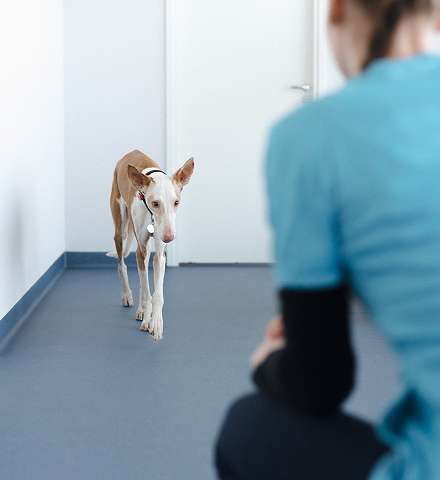
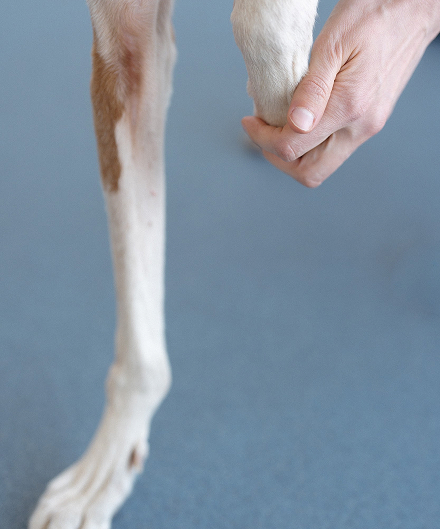
The appointment begins with a visual assessment of the animal’s movement and muscle tone. The veterinarian then performs a thorough examination of the joints and muscles and evaluates the range of motion of the joints.
To confirm an accurate diagnosis, we use modern diagnostic methods, including:
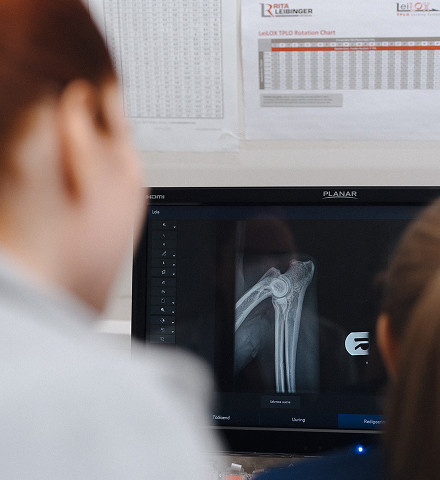
- X-rays;
- blood and synovial fluid analysis;
- computed tomography (CT)*;
- magnetic resonance imaging (MRI);
- diagnostic arthroscopy (visual examination of the inside of the joint).
*Please note: Computed tomography (CT) is not performed on-site at our clinic. If needed, patients are referred to one of our partner clinics for the examination.
X-ray examinations
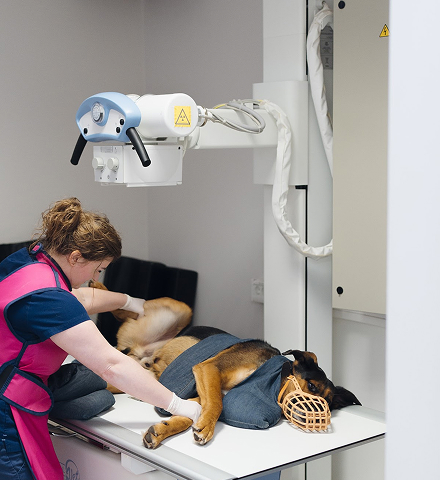
To obtain a high-quality X-ray image, the animal must be positioned correctly and remain completely still. Since the required positioning may be uncomfortable for the animal, orthopedic X-rays are often performed under mild sedation. Therefore, we ask that your pet not be fed for at least 4 hours before the examination.
To obtain a more accurate picture and better evaluate any changes, we often also take an images of the healthy limb for comparison.
Treatment options at EriVet
The treatment plan always depends on the diagnosis and your pet’s individual needs.
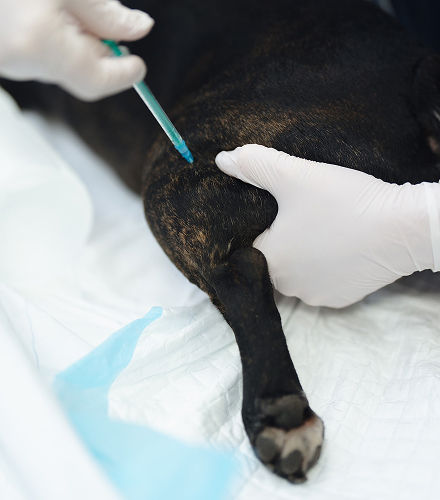
- Conservative (medical) treatment and rehabilitation: oral and injectable medications (including regenerative medicine) combined with professional physiotherapy.
- Regenerative medicine: we use modern methods to promote tissue healing and reduce inflammation, including platelet-rich plasma (PRP) and intra-articular hyaluronic acid injections. These treatments as a natural lubricant within the joint, helping to reduce friction and relieve pain.
- Orthopedic surgery: of fractures, joint surgery, and reconstruction of tendons and ligaments.
Arthroscopy
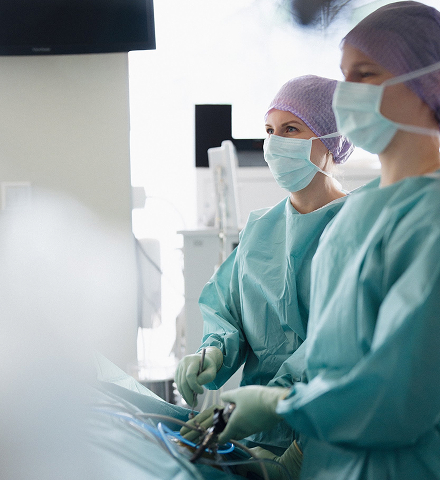
Arthroscopy is a modern minimally invasive surgical method that we use for both diagnosis and treatment.
Using a specialized miniature camera, are able to examine the inside of the joint in great detail and perform the necessary surgical procedures at the same time. This approach minimizes tissue trauma and allows for significantly faster recovery for your pet.
Official orthopedic screening
We perform official orthopedic screening examinations for dogs recognized by the Estonian Kennel Union. These examinations are important for both breeding planning and early detection of joint diseases:
- Hip Dysplasia screening (HD);
- Elbow Dysplasia screening (ED);
- Patellar luxation screening (PL).
Our orthopedists

Silvia Külasalu, DVM
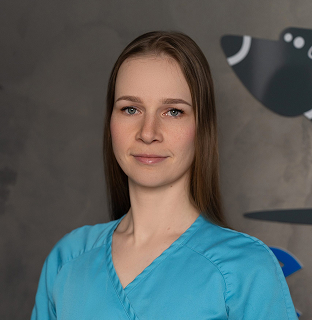
Linda Tammekivi, DVM